Supporting a family member through a hoarding cleanup
By Clara Larsen · Updated 2026-08-16
This is general information, not medical or mental health guidance. If hoarding is affecting a family member’s safety or wellbeing, a healthcare professional or social worker is the right resource alongside any physical cleanup.
Helping a parent, sibling, or other family member through a hoarding situation is difficult in ways that go beyond the physical work. The clutter is often the visible symptom of something harder to address directly, and how the cleanup is approached matters as much as the cleanup itself. If the cleanup instead follows a death in the family rather than an ongoing situation, our guide on estate cleanout after a death in the family covers that specific process.
Start with the person, not the stuff
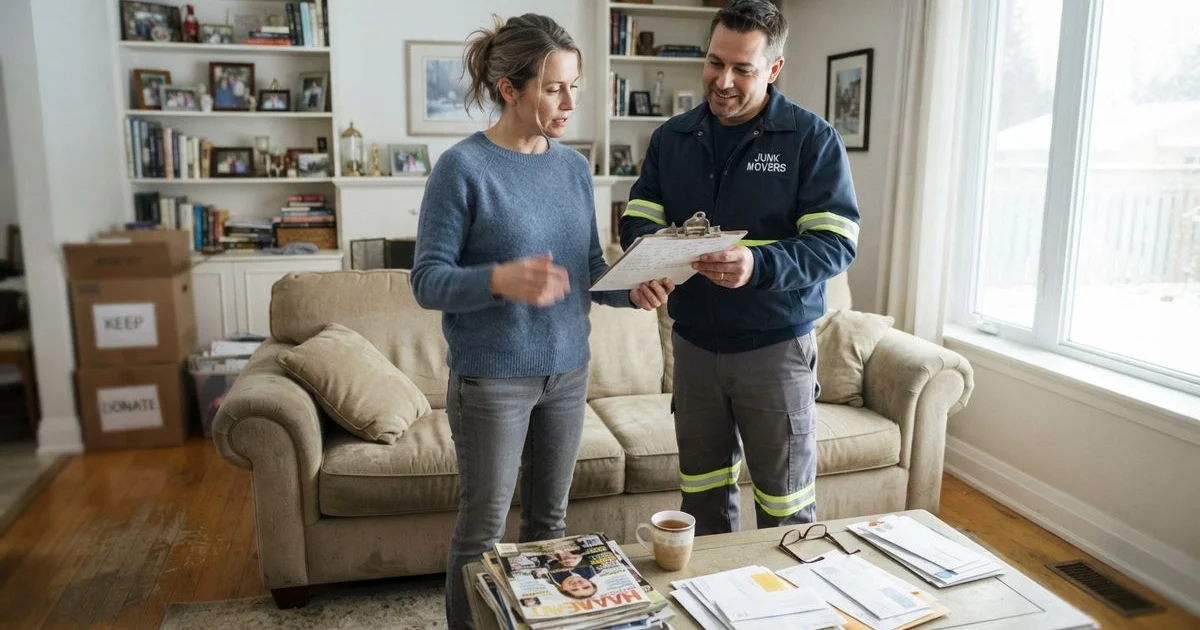
It’s tempting to focus entirely on logistics, how much needs to go, how fast, who’s hauling it, but a cleanout that happens to someone rather than with them tends to backfire. Where possible, involve the family member in decisions about pacing and what stays, even if it means the process takes longer than you’d like. Trust, once damaged by a cleanup that felt like it happened without consent, is hard to rebuild.
Recognizing when it’s more than clutter
Hoarding disorder is a recognized condition in its more significant forms, distinct from someone simply having a cluttered home. Signs worth taking seriously include blocked exits or pathways, an inability to use rooms for their intended purpose, and visible distress at the idea of removing items. If this pattern fits, looping in a healthcare provider or social worker alongside any physical cleanup gives the situation a better chance of actually improving, rather than just resetting until it recurs.
Real safety considerations
More severe hoarding situations can involve genuine hazards: blocked emergency exits, floors under structural strain from accumulated weight, mould from trapped moisture, pest activity, and in some cases biohazard material. These aren’t universal, many hoarding situations don’t reach this level, but they’re common enough that a professional assessment before diving in is worth the time, particularly if you’re not sure what you’re walking into.
| Severity | What it typically looks like | Approach |
|---|---|---|
| Mild clutter | Excess belongings, still navigable | Family-led sorting, standard removal |
| Moderate | Some rooms unusable, pathways narrow | Professional crew, careful pacing |
| Severe | Blocked exits, possible hazards, structural concern | Professional assessment first, specialized crew |
How professional crews approach this differently
Companies experienced with hoarding cleanups typically use a structured severity scale to assess a space before quoting or starting work, rather than treating it like a standard cleanout. This affects crew size, equipment, and sometimes whether specialized safety gear or a phased approach is needed. It also tends to mean more patience and less rushing than a standard job, which matters when a family member is present and emotionally invested in the process.
Taking care of yourself too
Supporting someone through this is genuinely taxing, and it’s reasonable to set boundaries around how much of the physical and emotional labour falls on you versus a professional crew. Bringing in help isn’t a failure to support your family member well, it’s often what makes it possible to keep supporting them at all.
Preparing for the first conversation
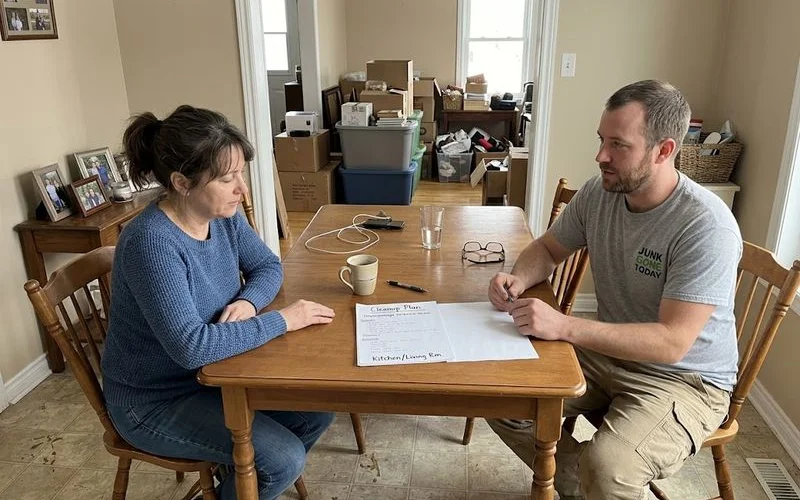
Bringing up the idea of a cleanup, even gently, can be one of the hardest parts of the whole process. Choosing a calm moment rather than a moment of crisis, focusing on specific concerns like safety rather than judgment about the clutter itself, and being ready for the conversation to take more than one attempt all help. Some families find it easier to introduce the idea of a professional assessment first, framing it as information gathering rather than a decision already made, which can lower the emotional stakes of that initial conversation.
What ongoing support might look like
A single cleanup, even a well-handled one, doesn’t always resolve the underlying pattern on its own. Some families find that a slower, staged approach, working through the home over multiple visits with breaks in between, works better than treating it as a one-time event. Checking in afterward, rather than assuming the work is finished once the crew leaves, gives a better chance of the improvement actually holding.
Browse companies experienced in this kind of work in the estate and hoarder cleanout category on the Ontario Junk Removal Directory, and see our scoring method for how we weigh care and professionalism, which matter especially for sensitive jobs like this one.
FAQ
- Is hoarding a mental health condition or just clutter?
- Hoarding disorder is a recognized mental health condition in more severe cases, distinct from ordinary clutter. If you suspect this is the case for your family member, involving a healthcare professional alongside any cleanup is worth considering.
- Should the cleanup happen without the person's involvement?
- Generally not, if it can be avoided. Removing belongings without someone's knowledge or consent, even with good intentions, often damages trust and can worsen the underlying difficulty rather than resolve it.
- Are there real health and safety risks in a hoarding situation?
- Yes, potentially. Blocked exits, structural strain from weight, mould, pest activity, and biohazard material can all be present in more severe cases, which is part of why professional assessment matters.
- How do professional crews handle hoarding cleanouts differently?
- Experienced crews typically use a hoarding level scale to assess severity beforehand, work at a pace that respects the person involved where possible, and come equipped for potential safety hazards that a standard cleanout wouldn't anticipate.