Free and low-cost junk removal options in Ontario
By Clara Larsen · Updated 2026-08-08
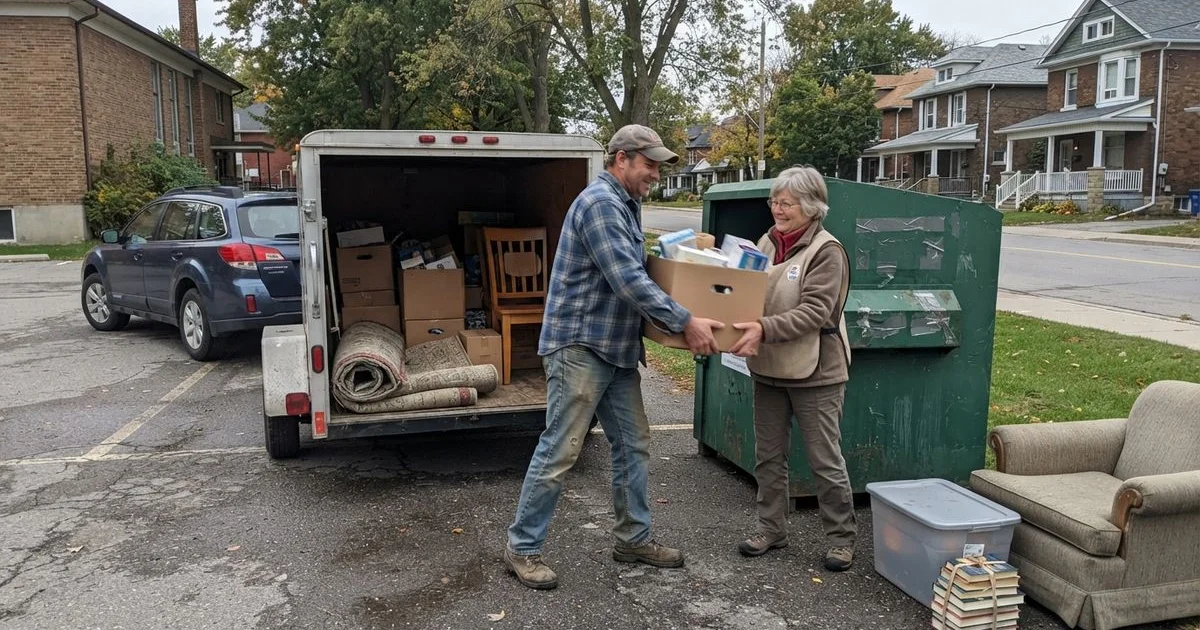
Paying for a full-service pickup isn’t always necessary. A mix of municipal programs, charitable donation pickup, and simple curb-side sharing covers a real share of what people are trying to get rid of, if you know where to look and are willing to work around their schedules.
Municipal bulky item pickup
Most municipalities across Ontario offer some form of scheduled large-item pickup, often a set number of free pickups per household each year, sometimes with a per-item fee beyond that limit. Rules vary significantly by city: what counts as eligible, how far ahead you need to book, and whether items need to be placed curbside by a specific time. Checking your municipality’s waste management page directly is the most reliable way to get current details, since programs and limits do change. Hazardous items like paint, batteries, and propane tanks are excluded from every free program here, so it helps to know what junk removal companies can’t take before you count on any of them.
Donation pickup through charities
A number of charitable organizations across Ontario will pick up furniture, appliances, and household goods in usable condition, at no cost to you. This works well for items that are still functional but no longer needed, a couch, a working fridge, a dresser, though most organizations are selective about condition and won’t take anything broken or heavily worn. Availability and scheduling vary by organization and region, and pickup windows tend to book out further ahead than a paid service would.
The curb alert approach
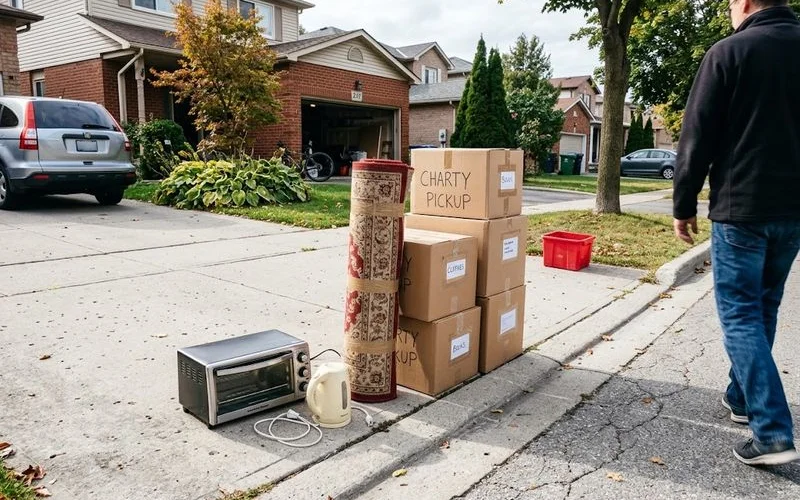
Placing usable items at the curb with a visible “free” sign is a low-effort way to divert things from disposal entirely, and it works surprisingly often for furniture, electronics, and household goods in decent shape. This isn’t a scheduled program, more a practical habit, but it’s worth doing before a paid pickup for anything genuinely still useful, since it costs nothing and often clears items within a day or two in busier neighbourhoods.
| Option | Best for | Typical cost |
|---|---|---|
| Municipal bulky pickup | A few large items, on a set schedule | Free or low per-item fee |
| Charity donation pickup | Usable furniture and appliances | Free |
| Curb alert | Usable items, no scheduling needed | Free |
| Paid junk removal | Full cleanouts, mixed or non-donatable items, tight timelines | Paid, priced by volume |
When paying for full-service removal still makes sense
Free options work best for a handful of usable items on a schedule you can plan around. They tend to fall short for a full cleanout involving a mix of genuine junk, broken items, and things too worn to donate, or for anyone working against a real deadline like a move-out date. A paid service also handles the sorting and hauling in one visit, which free options generally can’t match for volume or speed.
A note on donation tax receipts
If you’re donating a meaningful amount through a registered charity, ask about a donation tax receipt reflecting the fair market value of the items. Requirements and valuation practices vary by charity, and a tax professional or the Canada Revenue Agency’s current guidance is the right source for how a specific receipt affects your return.
Mixing free options with a paid pickup
For a lot of households, the realistic answer isn’t choosing one option exclusively, it’s combining a few. Set aside anything donatable for a charity pickup or a curb alert, use municipal bulky pickup for a couple of large items that fit the program’s limits, and book a paid removal only for what’s left over: genuine junk, broken items, and anything that needs to be gone faster than a free program can manage. This layered approach often ends up cheaper overall than defaulting straight to a full paid cleanout for everything.
A word on timing free programs
Free options tend to run on their own schedule, not yours. Municipal bulky pickup days are often set weeks in advance, and charity pickup slots can book out further than a paid service would. If your timeline has any flexibility, checking these schedules early, rather than the week you actually want items gone, makes it far more realistic to use them instead of defaulting to paid removal out of time pressure.
Browse eco-friendly and donation-based disposal providers on the Ontario Junk Removal Directory for companies that combine paid pickup with donation sorting, and see our scoring method for how we evaluate them.
FAQ
- Does my municipality offer free bulky item pickup?
- Many Ontario municipalities offer a limited number of free large-item curbside pickups per year, though rules and item limits vary by city. Check your municipal website for the current schedule.
- Will a charity pick up furniture for free?
- Several charities and donation organizations in Ontario offer free pickup for furniture and appliances in usable condition, though pickup windows and accepted items vary by organization and location.
- Is it worth paying for junk removal if free options exist?
- It depends on volume and timing. Free options usually work best for a few large items on a set schedule; a full cleanout with mixed junk, non-donatable items, or a tight deadline is often faster and more reliable through a paid service.
- Can I get a tax receipt for donated items?
- Registered charities can issue a donation tax receipt reflecting the fair market value of usable donated goods, which is worth asking about if you're donating a meaningful amount.