Office and commercial cleanouts: what businesses need to know
By Clara Larsen · Updated 2026-08-06
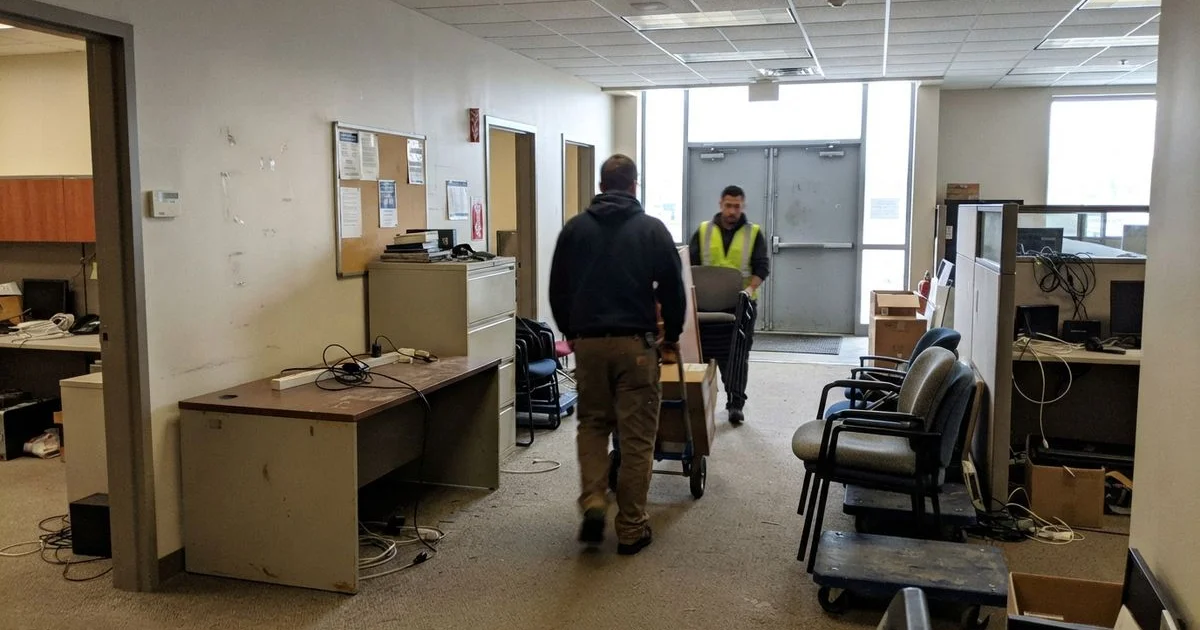
Commercial and office cleanouts share the basics with residential junk removal, someone hauls your unwanted stuff away, but the logistics around access, scheduling, and documentation are different enough to plan for separately.
What makes a commercial job different
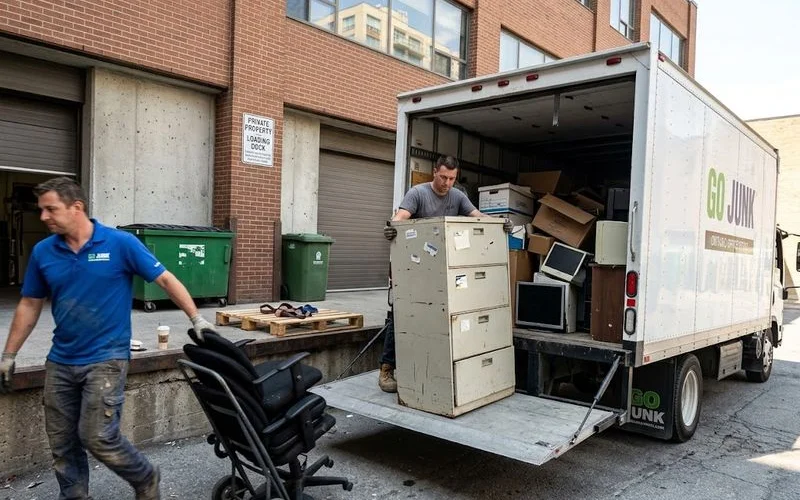
The biggest difference is usually access and timing rather than the physical work itself. A retail store, restaurant, or office often can’t have a crew moving furniture through customer-facing areas during business hours, which means scheduling around closing time, weekends, or a specific after-hours window matters more than it does for a typical home pickup. Building logistics also come into play: loading docks, freight elevators, and building management approval are common requirements that a residential job never has to deal with.
Common commercial scenarios
- Office relocations or downsizing. Old furniture, filing cabinets, and equipment that isn’t moving to a new space.
- Retail and restaurant turnovers. Clearing a space between tenants, often on a tight lease-transition deadline.
- Warehouse and industrial cleanouts. Larger volume, sometimes involving pallets, shelving, or equipment.
- Recurring waste management. Ongoing pickup schedules for businesses that generate consistent volume, rather than a single one-time job.
Recurring vs one-time service
A one-time office cleanout is priced similarly to a large residential job, based on volume and access. A recurring arrangement, common for restaurants, retail, and multi-unit buildings, is usually set up as a scheduled service with a set frequency, weekly or biweekly for example, rather than quoted per visit. Businesses generating a steady volume of waste tend to save on a recurring contract compared to booking one-off pickups each time.
| Job type | Typical setup |
|---|---|
| One-time office cleanout | Quoted per job, similar to a large residential cleanout |
| Retail or restaurant turnover | Quoted per job, often time-sensitive |
| Recurring commercial service | Scheduled contract at a set frequency |
Documentation that matters more for commercial jobs
Property managers and building management frequently require proof of insurance before granting a crew building access, particularly for jobs involving a freight elevator, loading dock, or shared common areas. Requesting a certificate of insurance ahead of the scheduled date, rather than the morning of, avoids a delay if building management wants it on file first.
Donation and resale for office material
Office furniture, working electronics, and equipment in reasonable condition are often good candidates for donation or resale rather than disposal, which some commercial junk removal companies handle directly as part of the service. It’s worth asking specifically, since not every company sorts for donation by default, and a business clearing out a full office can end up diverting a meaningful portion of the load away from landfill this way.
Getting the crew in and out without disrupting operations
For a business still operating during the cleanout, sequencing matters. Clearing a back office or storage room first, before touching anything customer-facing, keeps the visible parts of the business presentable while the work happens. If the job spans more than a day, agreeing on a section-by-section plan with the crew ahead of time avoids a half-finished space sitting in view during business hours. Restaurants and retail locations in particular benefit from confirming exactly which areas are off-limits during open hours versus fair game after close.
What to have ready before the crew arrives
A short prep list makes commercial jobs go faster: building access instructions (door codes, elevator keys, a contact for building management), a clear list of what’s staying versus going, especially in shared or ambiguous storage areas, and confirmation of who on-site can approve any changes to scope if the crew finds more than expected. For multi-tenant buildings, checking whether the property has restrictions on cleanout timing, some limit loading dock use to certain hours, saves a scheduling conflict on the day itself.
| Prep item | Why it matters |
|---|---|
| Building access details | Avoids delays at the door or loading dock |
| Clear scope list | Reduces confusion about what’s being removed |
| On-site decision-maker | Speeds up any changes found during the job |
| Property timing restrictions | Prevents a scheduling conflict with building rules |
Browse providers in the commercial junk removal category on the Ontario Junk Removal Directory, and see our scoring method for how we weigh reliability and communication, both especially important when a job needs to fit around business operating hours.
FAQ
- Can commercial junk removal be scheduled outside business hours?
- Many companies offer after-hours or weekend service specifically for offices and retail spaces that can't have a crew moving through during operating hours. Confirm availability when you get a quote.
- How is commercial pricing different from residential?
- Commercial jobs are often priced with a service contract or recurring schedule in mind, rather than a single visit, and may include considerations like building access, loading dock use, or freight elevator scheduling.
- Do I need a certificate of insurance from the company for a commercial job?
- Many commercial properties and property managers require proof of insurance before granting building access, so it's worth requesting a certificate of insurance ahead of the scheduled visit, not on the day.
- Can office furniture and old equipment be donated instead of disposed of?
- Often yes. Functional office furniture, electronics, and equipment in good condition can frequently be donated or resold rather than landfilled, which some companies handle as part of the service.